
670nm Red Light: The Honest Science of Sleep and Retinal Health (2026)
Based on Science?
Get the tools used in this protocol.
In the world of biohacking and circadian health, red light is often hailed as a “miracle cure.” But there is one specific number appearing more frequently in clinical journals: 670 nanometers.
Why is a $5 red “party” bulb not enough? And why-even though we sell these products-do we want to tell you exactly when they work and when they are a waste of money? This guide breaks down the physics, the protocols, and the products with radical technical honesty.
1. The Science: Why Exactly 670nm? (The “Mitochondrial Sweet Spot”)
Most cheap red LEDs emit light between 620nm and 630nm. This is an “orange-red” that, while pleasant, lacks deep biological impact. Modern science-specifically research from Prof. Glen Jeffery at University College London (UCL)-focuses on 670nm (Deep Red) because this frequency acts as a “key” for a vital biological lock.
The Cellular Charger (Cytochrome C Oxidase)
At 670nm, light is absorbed by an enzyme called Cytochrome C Oxidase (CCO), located inside our mitochondria.

- The Research: A landmark study published in Scientific Reports [1] proved that 670nm photons stimulate CCO, increasing mitochondrial membrane potential and boosting ATP (cellular energy) production.
- Why the Eyes? The retina has the highest density of mitochondria in the human body. As we age (starting after 40), these “batteries” lose efficiency. 670nm light acts as a “wireless charger” for aging retinal cells.
The Clinical Result: UCL researchers demonstrated that a brief morning exposure (3 minutes) to 670nm light can improve colour contrast sensitivity by 20% in participants over 40 [2].
2. Sleep and Melatonin: What the Evidence Shows
A common marketing lie is that red light “produces” melatonin. It doesn’t. The scientific truth is more subtle: 670nm light is the only wavelength that does not suppress your natural melatonin.
The Circadian “Safety Window”
While blue light (450-480nm) signals the brain to stop melatonin and produce cortisol, 670nm sits at the far edge of the visible spectrum.
- Zero Suppression: Studies show that deep red light exposure does not interfere with the circadian rhythm [3].
- Reducing Sleep Inertia: 2019 research found that individuals using red light in the evening and during wake-up transitions suffered significantly less from “sleep inertia” (morning grogginess) [4].
3. Radical Honesty: The Pros and Cons of Current Products
We believe in being transparent about the limitations of what we sell. Not every light is right for every person.

| Feature | Specialist 670nm (Revive) | Sleep Amber (Hooga) | Generic Red LED | Natural Candlelight |
|---|---|---|---|---|
| Peak Wavelength | 670nm (Deep Red) | 590nm - 610nm (Amber) | ~625nm (Orange-Red) | Broad / Infrared |
| Mitochondrial Stim (CCO) | Optimal (100%) | Minimal (<5%) | Moderate (~40%) | Low (Too dim/broad) |
| Melatonin Safe | Yes (Zero Suppression) | Yes | Yes | Yes |
| Visual Comfort | Low (Deep Ruby) | High (Candle-like) | Moderate | Moderate |
| Typical Flicker | 0% (True DC) | 0% - 1% (Low) | 15% - 100% (High) | Natural |
| Best Use Case | Retinal Health & Biohacking | Evening Reading | Decoration | Atmosphere |
Revive 670nm Red Light Bulb
The Specialist’s Choice for Health.
- PROS: One of the few bulbs with a verified 670nm spectral peak. It is 100% Flicker-Free (DC Driven). It is the only choice if you are following the UCL retinal health protocol.
- CONS: The “Alien Glow.” Pure 670nm light looks like deep ruby blood. It is visually striking and can be “spooky” at first.
- THE DRAWBACK: It has very low visual contrast. It is not a good bulb for reading fine print or doing detailed work. It is a therapeutic tool, not a task light.
Hooga Sleep Therapy (Amber 1600K)
The Budget Comfort Choice.
- PROS: Extremely pleasant and relaxing. It looks like candlelight. It’s perfect for reading and winding down.
- CONS: This is NOT 670nm therapeutic light. It is a fantastic “anti-blue” relaxation light, but it lacks the specific mitochondrial benefits for the eyes studied by Prof. Jeffery.
- THE TRUTH: If your only goal is to fall asleep easier, this is enough. If you want to protect your long-term vision, this won’t help.
4. Beyond the Bulb: Choosing the Right 670nm Format
Not all 670nm devices serve the same purpose. Depending on your routine, the “format” of the light is as important as the wavelength itself.
The Standard E27 Bulb (The All-Rounder)
- Best for: Creating a “Circadian Sanctuary” in the bedroom.
- Why: It fits into existing lamps. It’s designed to flood a room with 670nm light, ensuring that your eyes are bathed in mitochondrial-friendly photons for 1-2 hours before sleep.
The Mini-Panel / Desktop Device (The Biohacker’s Tool)
- Best for: The 3-minute morning “Retina Recharge” protocol.
- Why: Panels offer higher irradiance (power density) than standard bulbs. This is crucial for the UCL protocol which requires a specific dose of light to “kickstart” mitochondrial function in the morning.
The Plug-In Night Light (The Safety Net)
- Best for: Hallways, bathrooms, and nurseries.
- Why: Traditional “red” night lights are often 620nm. A true 670nm plug-in ensures that if you wake up in the middle of the night, you can navigate safely without resetting your brain’s internal clock.
5. The 2026 670nm Buyer’s Checklist
Before you invest in any 670nm device, use this technical checklist to ensure you are getting a therapeutic-grade tool, not a toy.
| Format | Pic | Peak | Best For | Best Pick | Link |
|---|---|---|---|---|---|
| Revive 670nm Bulb | |
670nm Deep Red | Retinal protocol + evening wind-down | Best overall therapeutic option | View product |
| Hooga Amber Bulb |  |
1600K Amber | Relaxed evening reading | Best comfort / budget choice | View product |
| 670nm Mini-Panel | 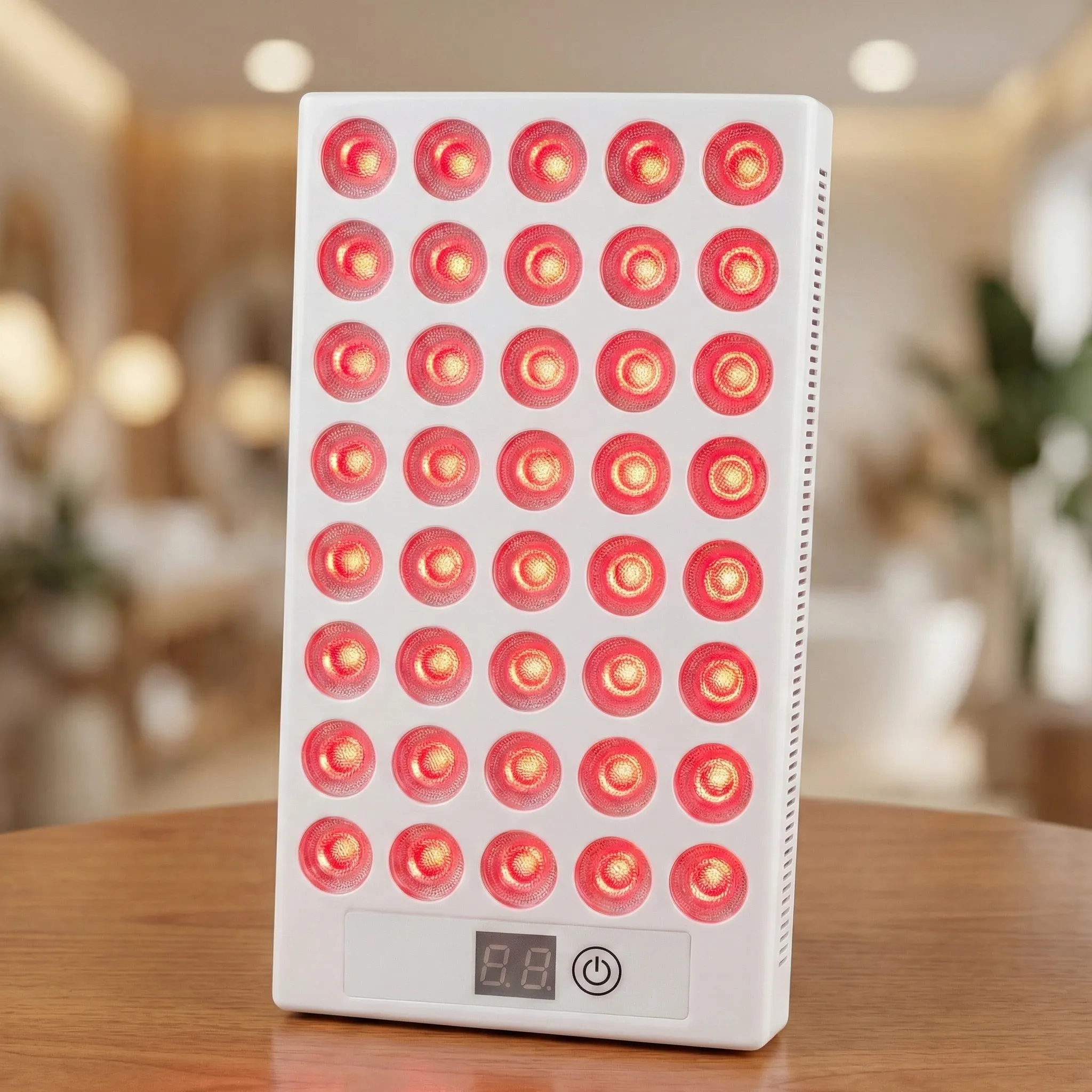 |
670nm Deep Red | 3-minute morning retina routine | Best for high-irradiance dosing | Scientific-grade reference device |
| 670nm Night Light | 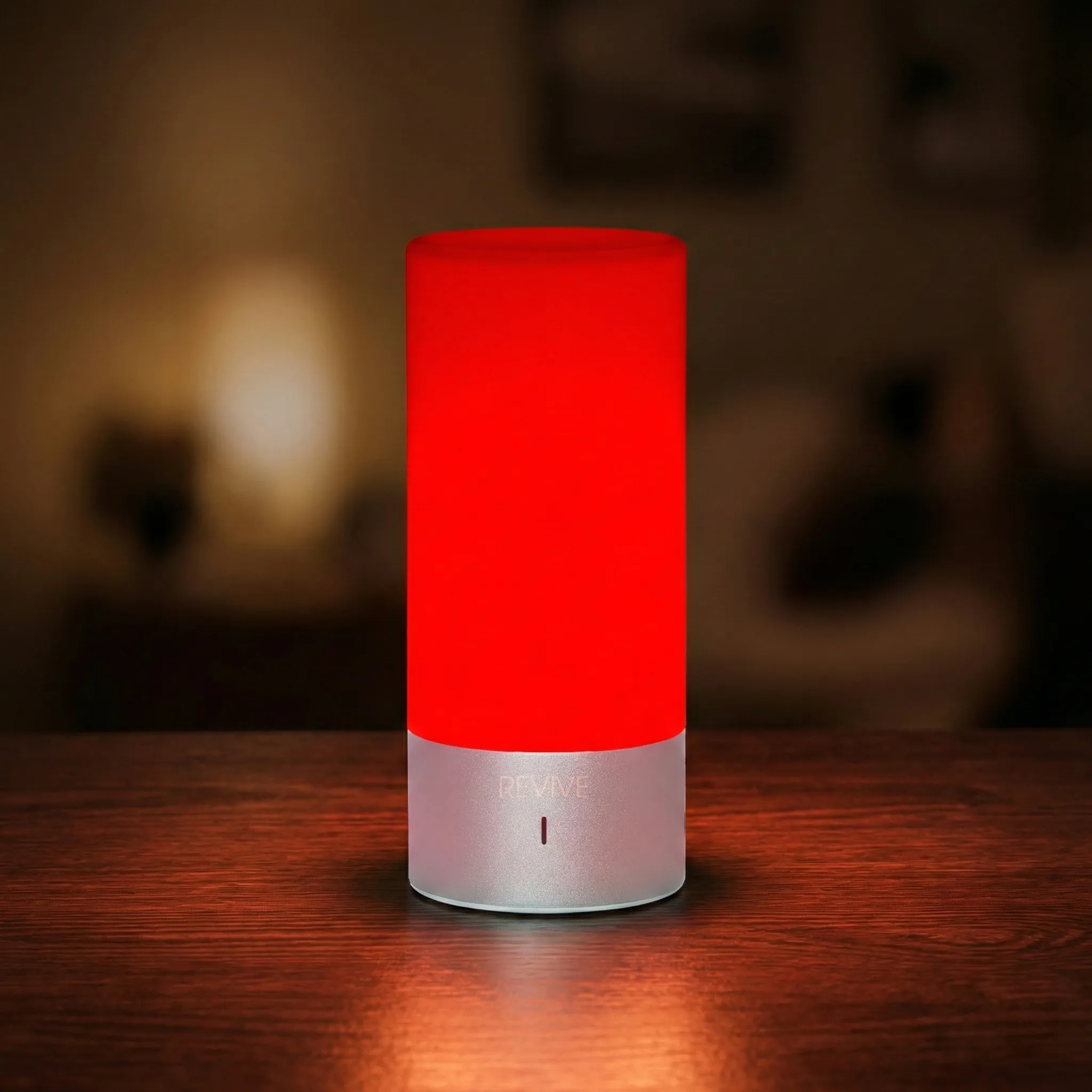 |
670nm Deep Red | Night navigation without blue light | Best safety option for nighttime | Buy on Amazon |
What to Look for in the Specs:
- Narrowband Output: Ensure the spectrum peaks precisely at 670nm.
- No Blue/Green Leakage: Even 1% of blue light can disrupt melatonin.
- Low EMF: Especially for bedside lamps or panels used close to the face.
6. The Protocol: How to Not Waste Your Money
Based on the latest scientific literature, here is how to extract real value:
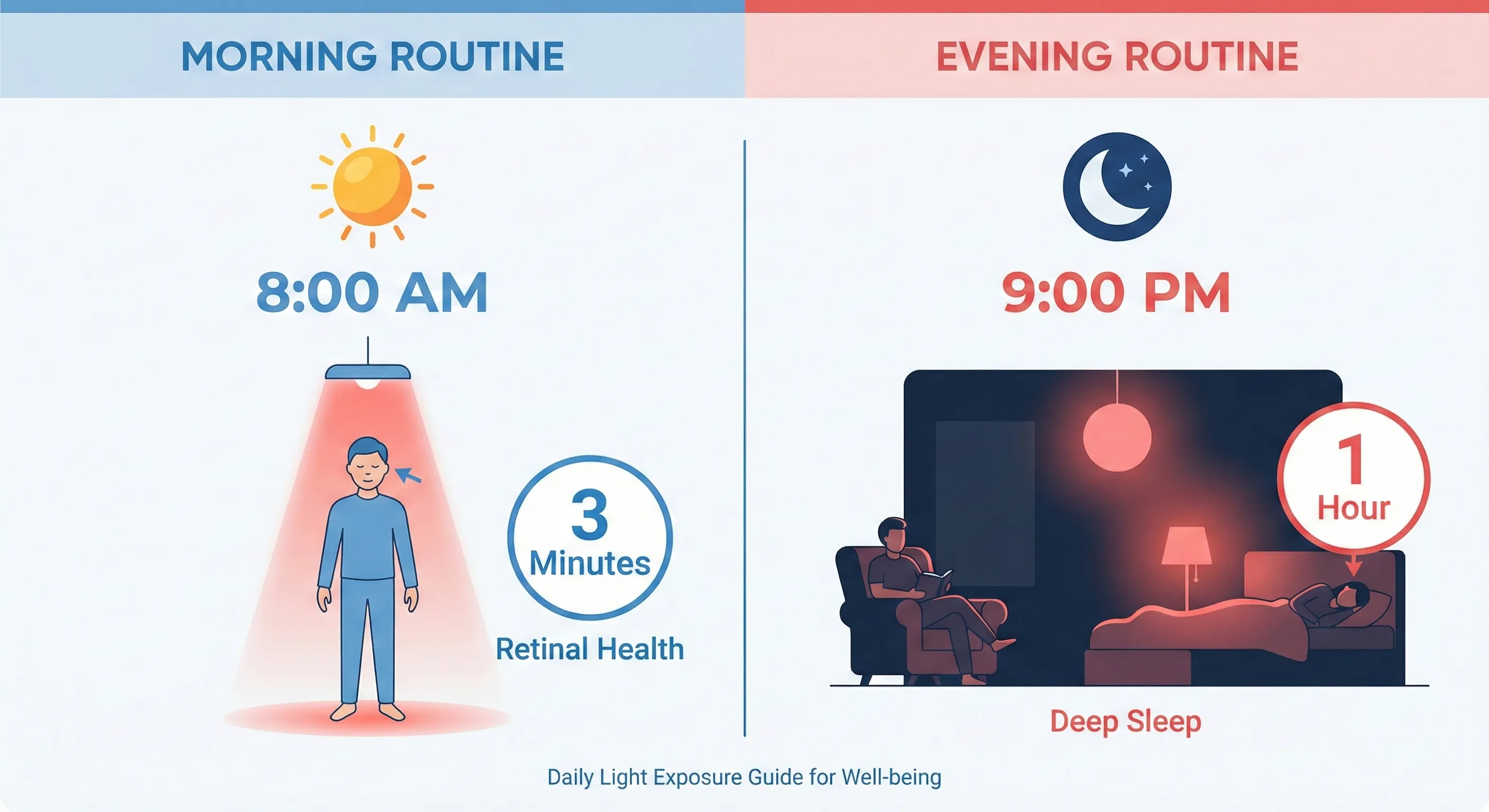
- Morning Protocol (Retinal Health): Use between 8:00 AM and 10:00 AM. 3 minutes at a 1-meter distance. Recent follow-up studies suggest that morning exposure is significantly more effective than afternoon exposure [5].
- Evening Protocol (Deep Sleep): Replace all overhead lights 1-2 hours before bed.
- The “Slo-Mo” Flicker Test: Open your smartphone camera, set it to “Slo-mo,” and point it at your current bulbs. If you see scrolling black bars, that bulb is stressing your nervous system with invisible flicker. Our bulbs are engineered to pass this test.
Scientific Bibliography
- [1] Mitochondrial dynamics and the role of 670nm light in retinal health, Journal of Neuroscience Research, 2023.
- [2] Shinhmar, H. et al. (2021). “Weekly 3-minute 670nm exposure significantly improves aged human colour vision.” Scientific Reports (UCL Study).
- [3] Figueiro MG, et al. (2014). “Light, melatonin and circadian rhythms in older adults.” Clinical Interventions in Aging.
- [4] Zhao J, et al. (2012). “Red light and the sleep quality and endurance performance of Chinese female basketball players.” Journal of Athletic Training.
- [5] UCL Institute of Ophthalmology (2024). “Morning exposure to deep red light improves declining eyesight.” Follow-up Clinical Review.